1856-1900 Brünn, Moravia
The Peas in the Obscure Journal
In 1866 an Augustinian friar in Brünn published the laws of inheritance, and the scientific world ignored them for thirty-five years. A neglected idea has just walked back in.
Every day, we find the historical story hiding inside the headlines. Riveting narratives that connect the past to the present, and make you wonder what happens next.
You'll receive one email per topic, per day. Pick as many as you like.
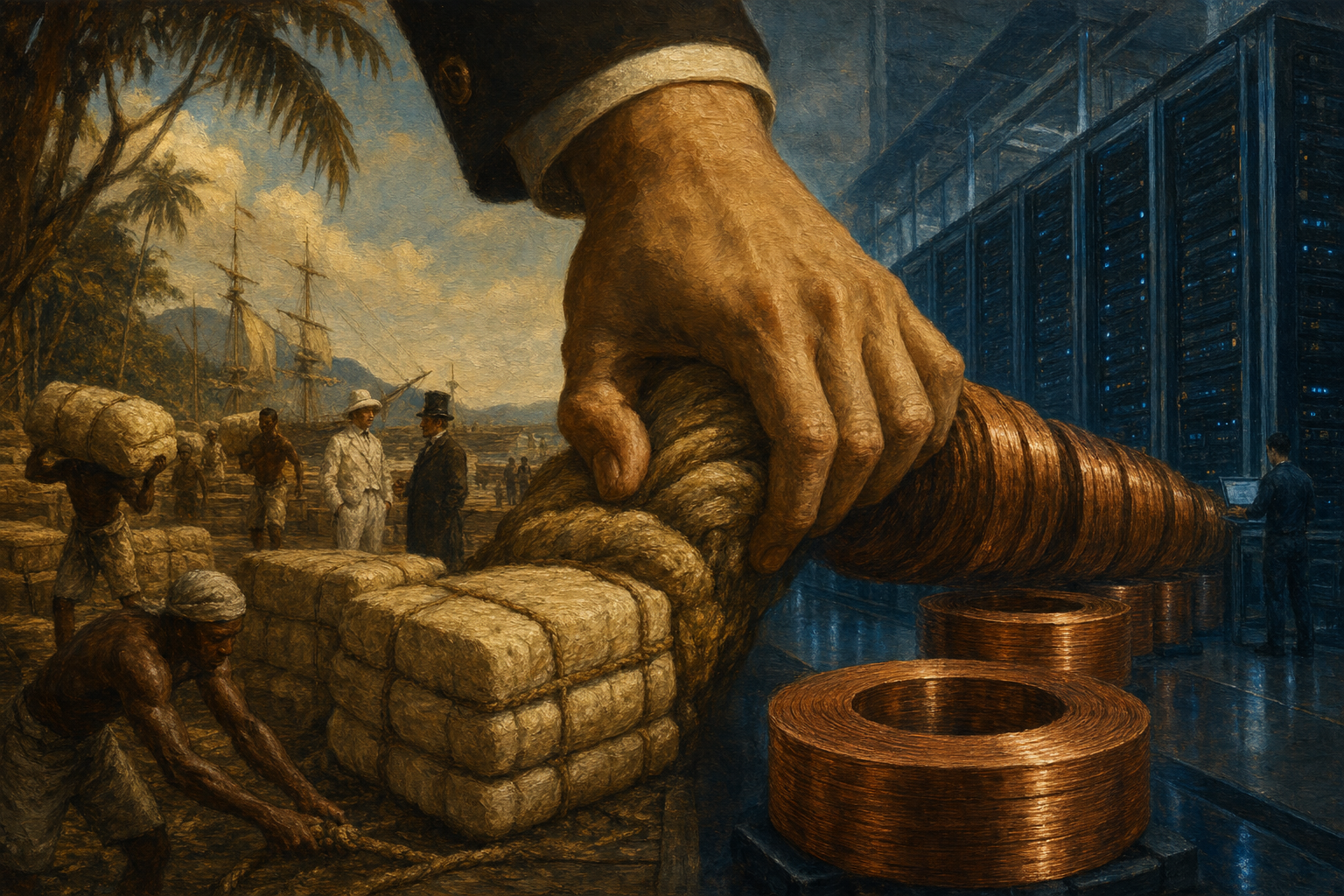
In 1925 the most valuable thing in America was a milky sap from trees on the far side of the world. Rubber ran every car, factory and phone line, Britain's colonies grew about three quarters of it, and Britain had just choked the supply: the Stevenson Plan restricted exports to drive the price from around thirteen cents a pound past a dollar. America, which bought most of the world's rubber, did not just pay. Commerce Secretary Herbert Hoover funded a global hunt for new supply, Harvey Firestone planted a million acres of Liberia, chemists chased synthetic rubber, and the cartel collapsed when the Dutch refused to join and flooded the market. Squeeze a customer hard enough and you do not make him pay; you teach him to never need you again. A century later it is copper for AI data centres and China's grip on rare earths, and the same scramble has begun.
Queen and worker bees hatch from identical eggs, yet one lives for years and lays a million eggs while the others live for weeks and never breed. For a century the textbook answer was a single food: royal jelly. In 2026 a team at UC Riverside showed the real answer is grander. Specialised worker bees build the queen a palace: a peanut-shaped 'royal crib' of custom wax with its own chemistry, and they cluster to keep it warm. Raise a would-be queen in ordinary wax instead and she develops poorly and often dies. The jelly feeds her; the crib crowns her. We love a story with one secret ingredient. Nature almost never works that way.
In 1866 an Augustinian friar in Brünn published the laws of inheritance, and the scientific world ignored them for thirty-five years. A neglected idea has just walked back in.
In 1807, a president tried to bring an empire to heel without firing a shot. It wrecked his own country first.
In 1753, a physicist died trying to capture atmospheric electricity. In 2024, four scientists captured it from a parking lot.
In 1579, Drake stole Spain's gold and Elizabeth used it to build the navy that defeated the Armada. In 2026, the EU is using Russia's frozen assets to fund Ukraine's war.
In August 1945, Japan's government was deadlocked on whether to surrender. The Emperor broke the tie. Iran's government is deadlocked now. The question is who breaks theirs.
In 1911, a Dutch physicist cooled mercury to near absolute zero and watched electricity do something impossible. In 2026, it happened again, in a sheet of carbon one atom thick.
In 1898, a chemist warned the world was running out of nitrogen. In 1909, Fritz Haber pulled it from the air. In 2026, CATL is pulling batteries from salt.
In 1951, Britain blockaded Iran's oil ports to break a democratically elected prime minister. It worked. What came after didn't.
In 1883, Irish-Americans kept blowing up London. The Home Secretary's response created the world's first counter-terrorism police unit. It is now investigating arson attacks on Jewish sites.
In 1780, a dead frog's leg kicked in a Bologna laboratory. The question it raised took 246 years to answer.