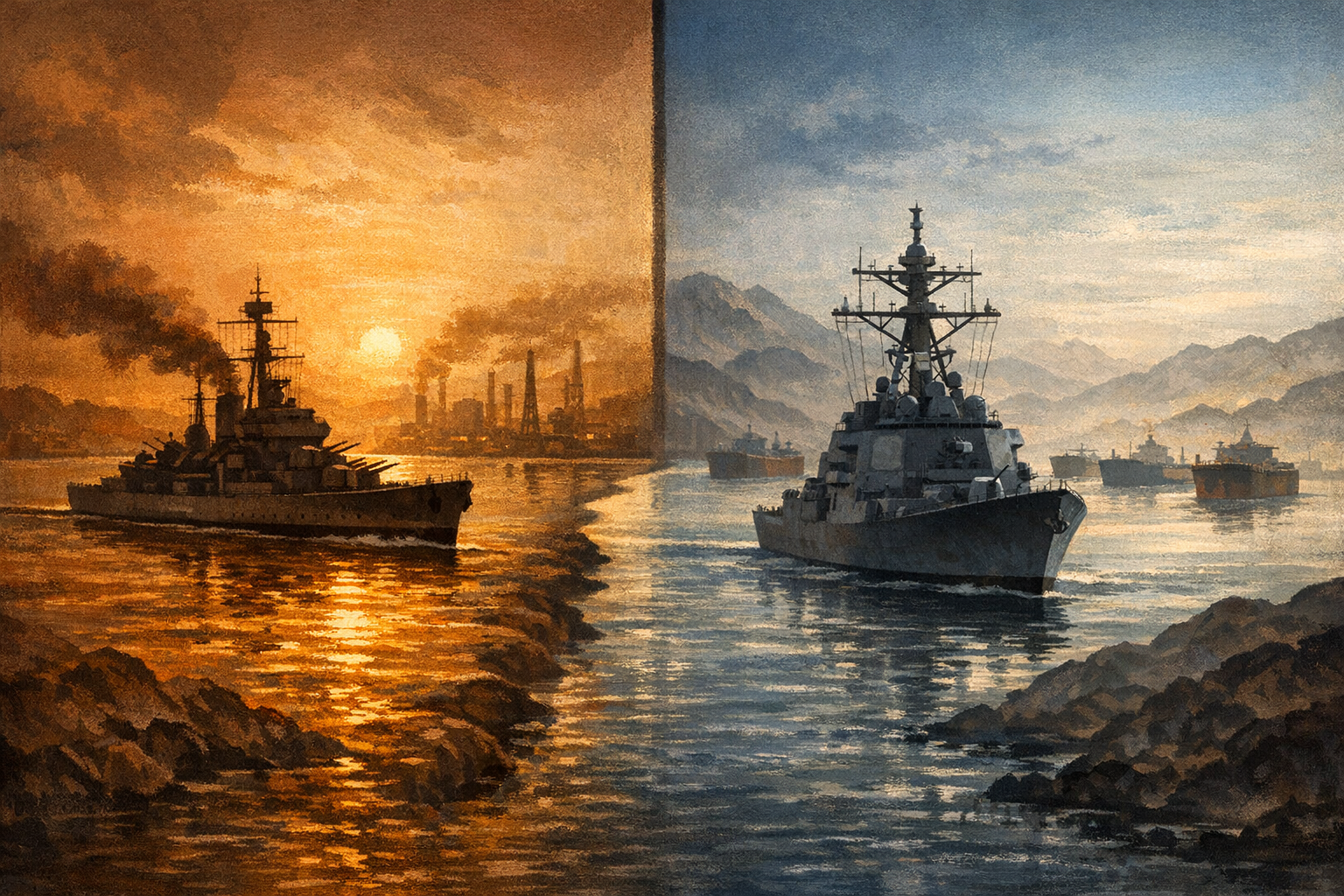
In the summer of 1951, the British light cruiser HMS Mauritius took up position off the coast of Abadan, Iran's largest oil port. The warship was there to enforce a blockade. No tanker carrying Iranian oil would be allowed to pass.
The man the British wanted to break was Mohammad Mossadegh, Iran's newly elected prime minister: a 69-year-old Swiss-educated lawyer who wept openly during parliamentary speeches, occasionally governed from his bed in pajamas, and had just done something that made him the most dangerous man in the Middle East. He had nationalized Iran's oil.
His reasoning was hard to argue with. The Anglo-Iranian Oil Company, controlled by the British government, had been extracting Iranian oil for over 40 years. In 1950, the company posted its largest-ever profit: £40 million. Of that, Iran received £16 million in royalties and taxes combined. Britain took £36 million. The British government collected more in corporate tax from Iranian oil than Iran received for owning the ground it came from.
When word reached Tehran in late 1950 that the American-owned Arabian American Oil Company had agreed to split profits with Saudi Arabia on a 50-50 basis, the insult crystallized. Iran asked for the same deal. The British Foreign Office refused.
On March 15, 1951, the Iranian parliament voted unanimously to nationalize the oil industry. Within weeks, Mossadegh was prime minister.
Britain's response was swift and total. They withdrew every technician from the Abadan refinery, which effectively shut it down, since the British had never trained Iranians to operate it. They froze Iran's hard currency accounts in British banks. They launched a diplomatic campaign to isolate Tehran at the United Nations and the World Court. And they sent the Royal Navy.
The blockade worked exactly as intended. Any tanker that tried to carry Iranian oil was intercepted. In July 1952, the Italian tanker Rose Mary, carrying 780 tons of nationalized Iranian crude, was forced by the Royal Navy into the British protectorate of Aden, where a court seized its cargo as "stolen property." After that, no captain in the world would touch Iranian oil. Exports collapsed to nearly zero.
Mossadegh fought back with the tools he had. He flew to The Hague in June 1952 and personally argued Iran's case before the International Court of Justice, insisting that a sovereign nation had the right to nationalize its own resources. On July 22, the Court ruled in Iran's favor: it had no jurisdiction to stop the nationalization. The law was on his side.
It did not matter. TIME magazine had named him Man of the Year. The World Court had declined to condemn him. His cause was legally sound and morally clear. But Iran's economy was suffocating. Oil revenue, which had funded roughly a third of the government's budget, had dropped to almost nothing. The bazaars were restless. Inflation was climbing. The coalition that had carried Mossadegh to power was beginning to fracture.
This was the opening the British had been waiting for. They went to the Americans.
The Eisenhower administration, convinced by British arguments that Mossadegh's weakness could open the door to Soviet influence, authorized the CIA to act. The operation was codenamed TP-AJAX in Washington and Operation Boot in London. It was run on the ground by Kermit Roosevelt Jr., the grandson of Theodore Roosevelt, who worked out of the American embassy in Tehran with a budget, a network of paid agents, and a plan to turn the streets against the prime minister.
The first attempt, on August 15, 1953, failed. Mossadegh had been tipped off. Key conspirators were arrested. The Shah, who had signed the order to dismiss Mossadegh, fled the country.
Roosevelt was ordered to abort. He refused. Four days later, on August 19, paid mobs flooded the streets of Tehran. By evening, army units loyal to the Shah had stormed Mossadegh's residence. Roughly 300 people were killed in the fighting. Mossadegh surrendered the following day. The Shah returned. The oil flowed again, this time under a new consortium that gave British and American companies the profits and Iran a better cut but no control.
Mossadegh spent three years in prison and the rest of his life under house arrest. He died in 1967, forbidden even to be buried in a public cemetery. His body was interred beneath the floor of his own living room.
The Echo
Today, April 21, 2026, a US naval blockade of Iranian ports enters its ninth day. The ceasefire between the United States and Iran, brokered by Pakistan, expires tonight. The US has seized an Iranian cargo ship. Iran has closed the Strait of Hormuz in retaliation. Oil shipments through the waterway, which carries roughly 20% of the world's seaborne crude, have dropped by more than 90%.
Iran says it will not send negotiators to Pakistan. President Trump says: "They're going to negotiate, and if they don't, they're going to see problems like they've never seen before."
The mechanism is the same one Britain used in 1951. Blockade the ports. Strangle the economy. Force a concession. Seventy-five years ago, the blockade achieved its immediate objective. Mossadegh fell. The oil flowed. The West won.
Then came the consequences. The Shah's authoritarian rule, enabled by the coup, created the conditions for the 1979 Islamic Revolution. The Revolution produced the hostage crisis. The hostage crisis produced 45 years of mutual hostility. And 45 years of mutual hostility produced the war that is happening right now, in the same waterway, over the same resource, with the same tools.
The blockade worked. What came after it is still unfolding.