1951-1953 Iran
The Blockade
In 1951, Britain blockaded Iran's oil ports to break a democratically elected prime minister. It worked. What came after didn't.
Every day, we find the historical story hiding inside the headlines. Riveting narratives that connect the past to the present, and make you wonder what happens next.
You'll receive one email per topic, per day. Pick as many as you like.
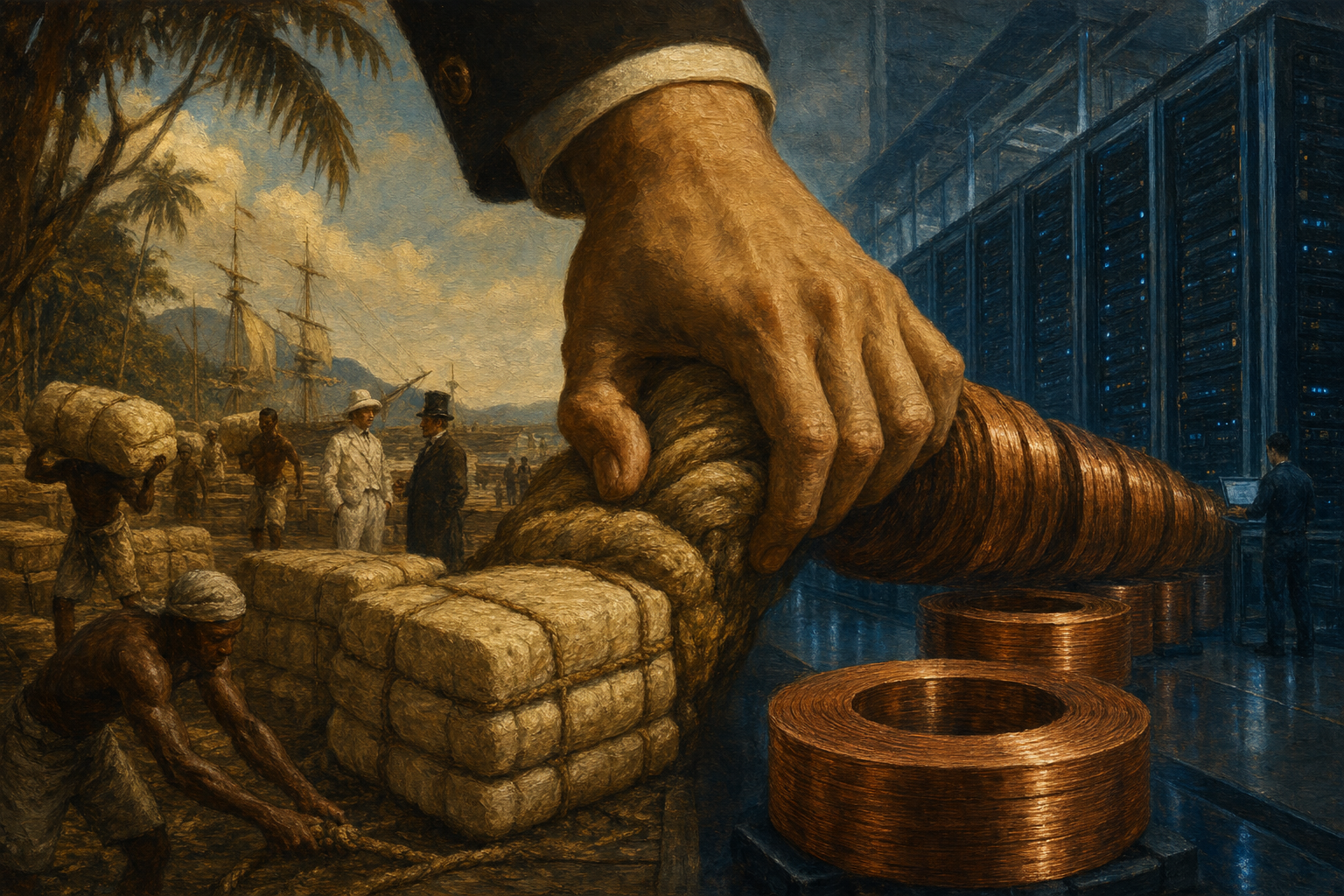
In 1925 the most valuable thing in America was a milky sap from trees on the far side of the world. Rubber ran every car, factory and phone line, Britain's colonies grew about three quarters of it, and Britain had just choked the supply: the Stevenson Plan restricted exports to drive the price from around thirteen cents a pound past a dollar. America, which bought most of the world's rubber, did not just pay. Commerce Secretary Herbert Hoover funded a global hunt for new supply, Harvey Firestone planted a million acres of Liberia, chemists chased synthetic rubber, and the cartel collapsed when the Dutch refused to join and flooded the market. Squeeze a customer hard enough and you do not make him pay; you teach him to never need you again. A century later it is copper for AI data centres and China's grip on rare earths, and the same scramble has begun.
In 1951, Britain blockaded Iran's oil ports to break a democratically elected prime minister. It worked. What came after didn't.
In 1883, Irish-Americans kept blowing up London. The Home Secretary's response created the world's first counter-terrorism police unit. It is now investigating arson attacks on Jewish sites.
In 1601, a Jesuit priest offered the Chinese emperor two clocks and earned a century of access. In 2026, the United States offered Cuba Starlink.
In 1637, a landowner refused to pay a twenty-shilling tax and nearly brought down the English crown. In 2026, a toy company did the same to a president's trade policy.
In 1303, a French king sent soldiers to slap the Pope across the face. The papacy never fully recovered. This week, the argument started again.
In 1776, France secretly armed the American rebels through a fake trading company run by a playwright. In 2026, Chinese cargo planes are landing in Tehran.
In 432 BC, Athens closed every port in its empire to a small Spartan ally. The war that followed lasted twenty-seven years.
In February 1947, Britain's fuel minister had been warned that coal stocks were dangerously low. He bet on warm weather. The worst winter of the century arrived instead, and four million people lost their jobs in a week.
For 428 years, Denmark pointed cannons at every ship that entered the Baltic Sea and demanded payment. The toll made Denmark rich, triggered wars, and was eventually abolished not by force but by a cheque.
In 1192, the most feared warrior in Christendom marched twice to the gates of Jerusalem and turned back both times. He had won every battle. He could not win the peace.