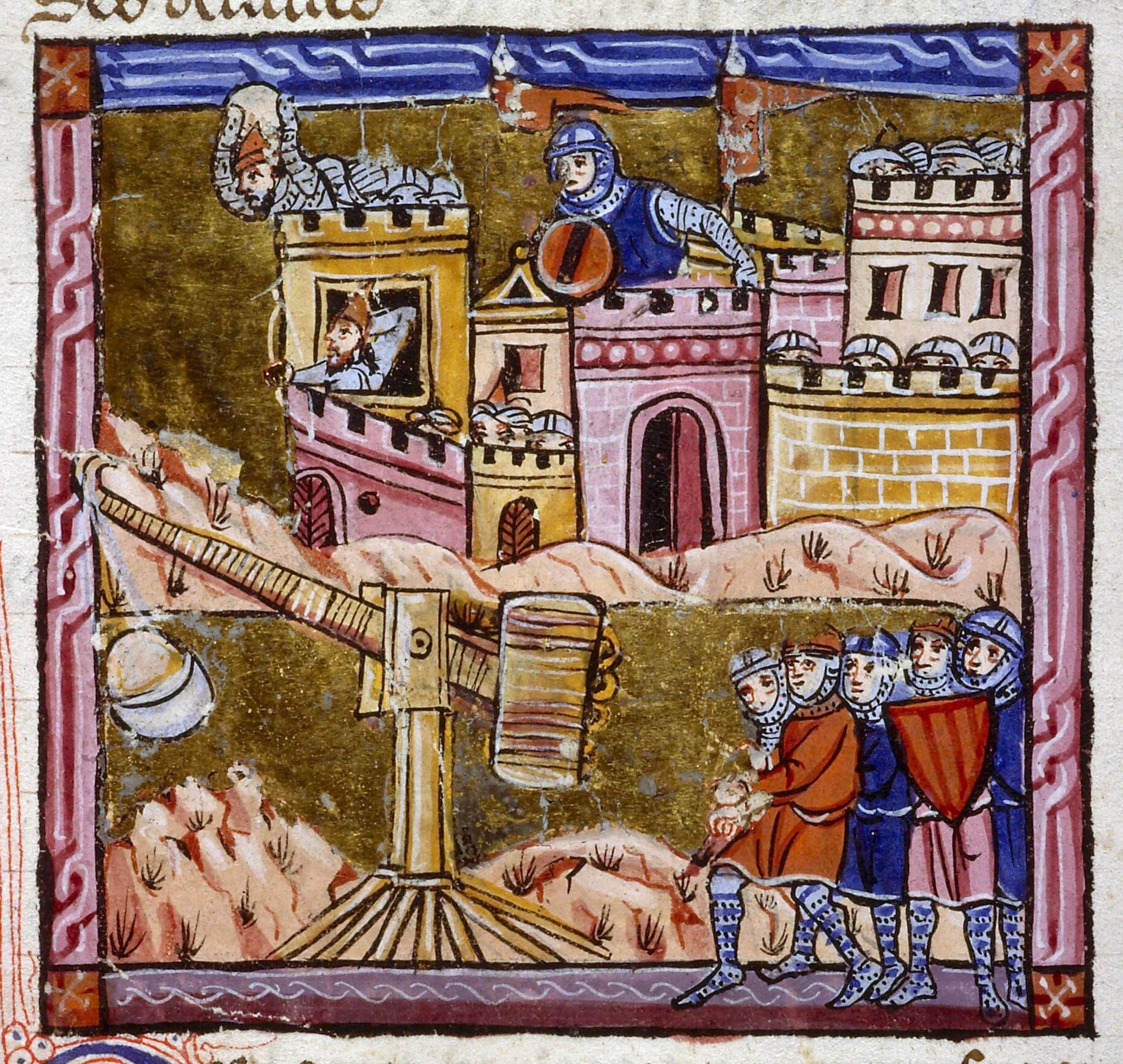
Richard I of England arrived in the Holy Land in June 1191 with the largest Crusader army assembled in a generation and a reputation for violence that preceded him by several hundred miles. Within weeks he had captured Acre, the fortified port city that had resisted a two-year siege. In September, at the Battle of Arsuf, he shattered Saladin's field army in a disciplined cavalry charge that became a textbook case in medieval warfare. By autumn, the coastal road from Acre to Jaffa was in Crusader hands, and every military mind in the Levant understood the same thing: Richard could not be beaten in open battle.
Saladin understood it too. And so he stopped offering open battle.
What followed was not a war of swords but a war of clocks. Saladin, the Sultan of Egypt and Syria, withdrew behind Jerusalem's walls and waited. He did not need to defeat Richard. He needed Richard to defeat himself, and he had excellent reason to believe it would happen. Word had already reached the Muslim camp that Richard's brother John was conspiring with Philip II of France to seize the English crown. Every month Richard spent in the desert was a month John spent consolidating power at home. Saladin's strategic calculation was elegant in its simplicity: the man who had crossed the Mediterranean to take Jerusalem could not stay forever, and the man who controlled Jerusalem did not have to go anywhere.
Richard marched on Jerusalem twice. In January 1192, the Crusader army advanced to within twelve miles of the city, close enough to see its walls. Rain, hail, and freezing cold battered the camp. His commanders warned that even if they took the city, they could not hold it against a relieving force once the bulk of the army went home. Richard retreated to the coast.
He tried again in June, advancing once more to the outskirts. Once more, the same calculus: the city could be stormed but not held. Richard reportedly refused to even look at Jerusalem, shielding his eyes and saying that if he was not worthy to take the city, he was not worthy to gaze upon it. The army turned back a second time.
Between the marches, Richard negotiated. He sent envoys to Saladin's brother, al-Adil, proposing increasingly creative arrangements: a marriage alliance between al-Adil and Richard's sister Joan, a shared sovereignty over Jerusalem, various configurations of who would control which fortress. Saladin listened politely and agreed to nothing binding. He sent gifts of fruit and snow for cooling Richard's drinks. He sent his personal physician when Richard fell ill. He treated his enemy with exquisite courtesy and absolute strategic patience.
On September 2, 1192, they signed the Treaty of Jaffa. The terms told the story of who had won. Christians would keep a narrow coastal strip from Tyre to Jaffa. Jerusalem remained under Muslim control. Unarmed Christian pilgrims would be permitted to visit the holy sites. The fortifications at Ascalon, which Richard had spent months rebuilding at enormous expense, would be demolished and the town returned to Saladin.
Richard departed the Holy Land on October 9, 1192. He had never entered Jerusalem. He had won every engagement, taken every fortress he besieged, and broken every army sent against him. He left with a coastal strip and a three-year truce. Saladin, who had lost battle after battle, kept the only thing that mattered.
The Echo
On April 11, 2026, Vice President JD Vance left Islamabad after 21 hours of negotiations with Iran produced no agreement. He described the American proposal as a "final and best offer." The Iranians described the American demands as "excessive." Iran's foreign ministry noted that some points were agreed, adding that it was "natural" no deal would be reached in a single day.
The structural parallel is not about armies and fortresses. It is about time.
The United States entered the Iran conflict from a position of overwhelming military superiority, just as Richard entered the Crusade from a position of battlefield dominance. American strikes degraded Iranian infrastructure across six weeks of fighting. Militarily, the outcome was never in doubt. But military dominance and diplomatic resolution are different currencies, and they do not convert at a fixed rate.
Iran's negotiating position in Islamabad mirrored Saladin's behind the walls of Jerusalem. Tehran does not need to match American firepower. It needs to wait. The ceasefire clock is ticking. Domestic political pressures in Washington, midterm calculations, oil market anxieties, allied fatigue: these are the equivalents of John's conspiracy and Philip's scheming that pulled Richard home. Every week the conflict continues without resolution costs the United States in political capital. It costs Iran in infrastructure. The question is which currency runs out first.
Supporters of the administration's approach argue that Vance's willingness to walk away strengthens the American position: a "final offer" only works as leverage if you are genuinely prepared to resume operations, and Iran's refusal to commit on nuclear development justifies the hardline stance. The Strait of Hormuz remains effectively closed despite the ceasefire, which means the pressure has not been sufficient. More is needed, not less.
Critics argue that framing 21 hours as a failure misreads the situation entirely. Iran's foreign ministry said it was "natural" that a single day of talks would not resolve a conflict with decades of accumulated grievances. The American insistence on speed, on a "final offer" delivered within hours, repeats Richard's error: assuming that military success entitles you to diplomatic success on the same timeline. Saladin's negotiators would have recognized the Iranian approach instantly. Agree to nothing. Be courteous. Send fruit. Wait.
Both readings have merit. And the Treaty of Jaffa suggests a possible resolution that neither side will find satisfying. Richard eventually got something: access for pilgrims, a coastal foothold, a face-saving truce. Saladin kept what he could not afford to lose: Jerusalem. Neither leader achieved their stated objective. Both claimed a version of victory.
The question now is whether the United States and Iran arrive at their own Treaty of Jaffa: a deal where both sides get less than they want and more than the alternative, announced with enough ambiguity that each can tell their public a different story about who won.
Richard the Lionheart won every battle of the Third Crusade. He never saw Jerusalem.
Winning every battle, it turns out, is not the same as winning.