November 1956 to January 1957, London and Washington
When Eisenhower Sold the Pound
London, November 1956. Berlin, May 2026. The same lever, in two languages.
Every day, we find the historical story hiding inside the headlines. Riveting narratives that connect the past to the present, and make you wonder what happens next.
You'll receive one email per topic, per day. Pick as many as you like.
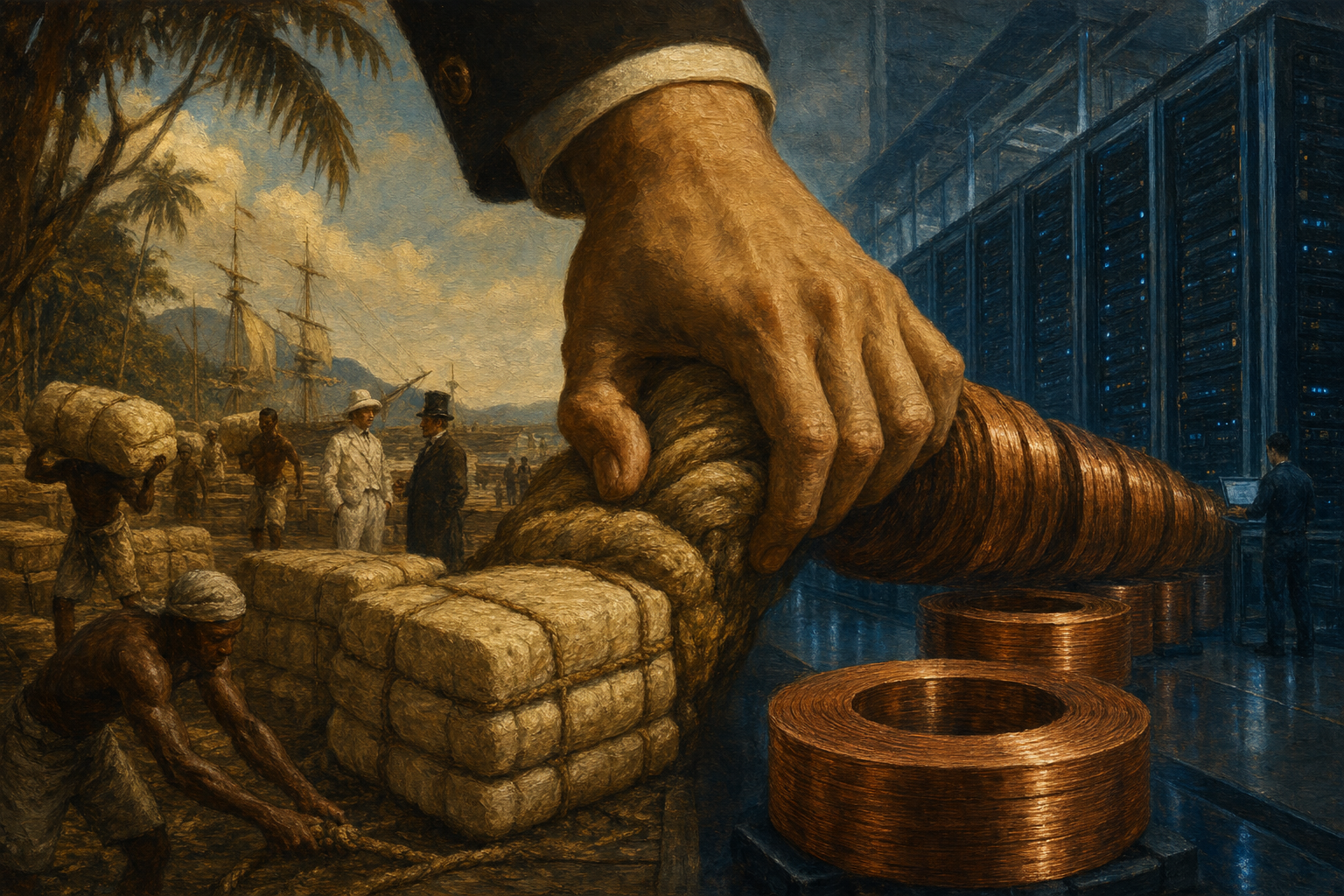
In 1925 the most valuable thing in America was a milky sap from trees on the far side of the world. Rubber ran every car, factory and phone line, Britain's colonies grew about three quarters of it, and Britain had just choked the supply: the Stevenson Plan restricted exports to drive the price from around thirteen cents a pound past a dollar. America, which bought most of the world's rubber, did not just pay. Commerce Secretary Herbert Hoover funded a global hunt for new supply, Harvey Firestone planted a million acres of Liberia, chemists chased synthetic rubber, and the cartel collapsed when the Dutch refused to join and flooded the market. Squeeze a customer hard enough and you do not make him pay; you teach him to never need you again. A century later it is copper for AI data centres and China's grip on rare earths, and the same scramble has begun.
London, November 1956. Berlin, May 2026. The same lever, in two languages.
Caracas, 1959. Abu Dhabi, 2026. The same telegram, in reverse.
Berlin, March 1878. Brussels, April 2026. The same letter.
In 421 BC Athens and Sparta agreed a peace that was supposed to last fifty years. It lasted eighteen months. The breathing room was used by both sides to make their next war worse. This week, eight years into a different total peace, dozens of bombings preceded a presidential election in Colombia.
In June 1939 a British king ate his first hot dog at Hyde Park, three months before the world went to war. This week, his grandson is in Washington at another moment when London and Washington need to be photographed liking each other.
In August 1071 the Byzantine emperor brought a polyglot army to defend Anatolia. The hired half walked away the night before the battle. The empire never recovered. This week, a similar exit happened on a different continent.
Four hundred and four years ago this week, a Persian shah hired a Western fleet to break a Western tollkeeper's grip on the Strait of Hormuz. The strait is in the news again.
In 1807, a president tried to bring an empire to heel without firing a shot. It wrecked his own country first.
In 1579, Drake stole Spain's gold and Elizabeth used it to build the navy that defeated the Armada. In 2026, the EU is using Russia's frozen assets to fund Ukraine's war.
In August 1945, Japan's government was deadlocked on whether to surrender. The Emperor broke the tie. Iran's government is deadlocked now. The question is who breaks theirs.