1570s–1644, Ming China and the East Asian Silver World
The Bill That Arrived in Silver That Was No Longer There
How a war in Korea bankrupted an empire that won it, and what the Strait of Hormuz owes to a dead tax reformer
Every day, we find the historical story hiding inside the headlines. Riveting narratives that connect the past to the present, and make you wonder what happens next.
You'll receive one email per topic, per day. Pick as many as you like.
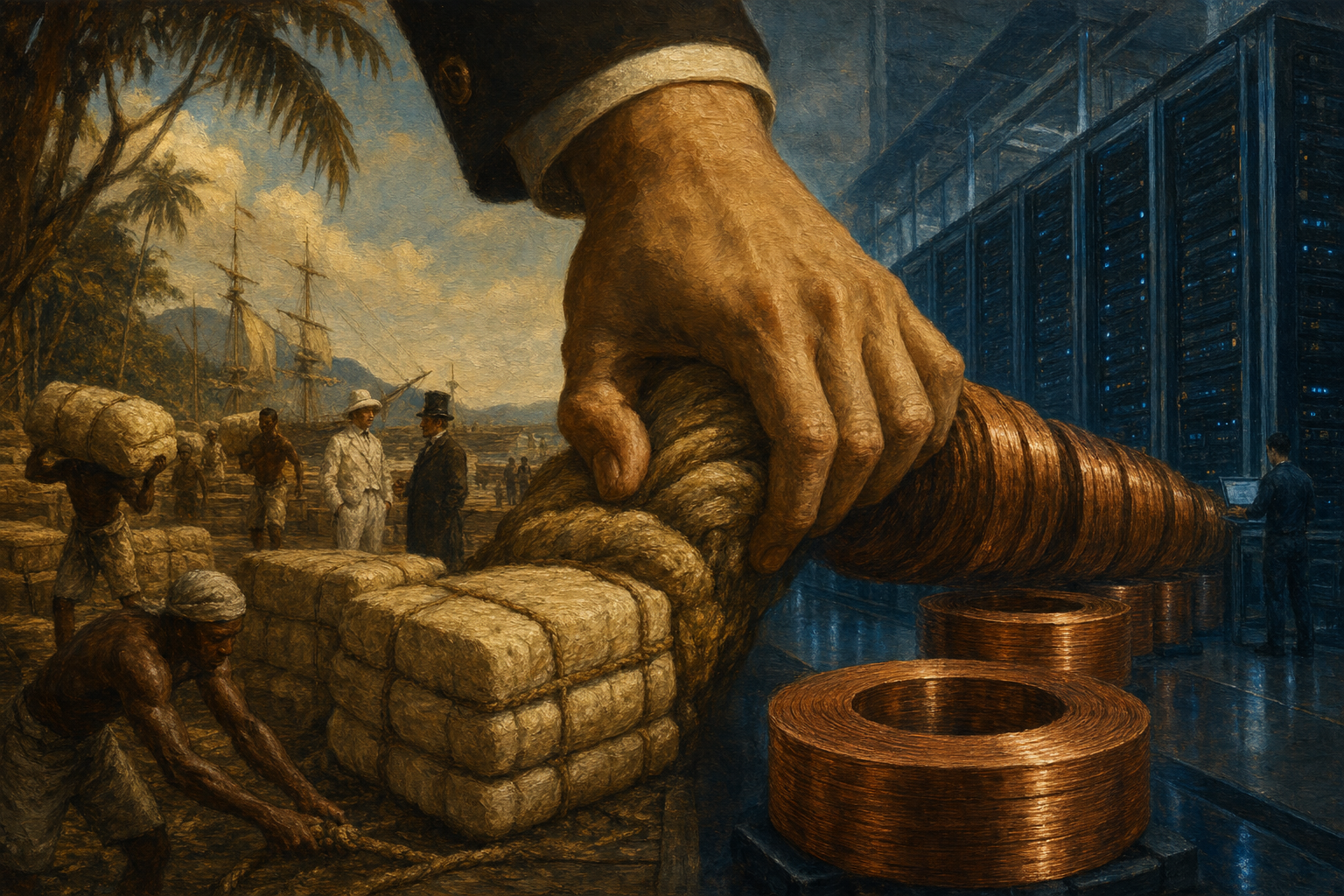
In 1925 the most valuable thing in America was a milky sap from trees on the far side of the world. Rubber ran every car, factory and phone line, Britain's colonies grew about three quarters of it, and Britain had just choked the supply: the Stevenson Plan restricted exports to drive the price from around thirteen cents a pound past a dollar. America, which bought most of the world's rubber, did not just pay. Commerce Secretary Herbert Hoover funded a global hunt for new supply, Harvey Firestone planted a million acres of Liberia, chemists chased synthetic rubber, and the cartel collapsed when the Dutch refused to join and flooded the market. Squeeze a customer hard enough and you do not make him pay; you teach him to never need you again. A century later it is copper for AI data centres and China's grip on rare earths, and the same scramble has begun.
How a war in Korea bankrupted an empire that won it, and what the Strait of Hormuz owes to a dead tax reformer
In 1399, an English king who had abolished parliamentary restraint on his own power was overthrown by a man from his own bloodline. The challenger said he only wanted what was his.
In 1954, the creator of the most powerful weapon on Earth was told he was a threat to national security. Not for what he had done, but for what he refused to do next.
Two ships packed with gunpowder drifted toward the stranglehold on Europe's richest port. The explosion was perfect. The outcome was not.
In 1905, two exhausted empires needed a face-saving exit from a war neither could afford. A third-party mediator gave them one -- and the parallels to yesterday's ceasefire are uncanny.
Philip II weaponized the only cold-storage technology on Earth. The Dutch responded by inventing global capitalism.
In 1911, Germany sent a warship to Morocco to call France's bluff. It worked — until it didn't. The anatomy of a deadline that devours its maker.
Napoleon tried to starve Britain with a trade blockade. He bankrupted France instead — and the parallels to today's chokepoint wars are almost too precise.
The 1720 bubble that bankrupted Isaac Newton — and why your portfolio should be nervous
When Ottoman Sultan Murad IV made drinking coffee a capital offence — and what it tells us about today's AI regulation debate