In 2026, the United Nations is warning that a coming El Nino could push parts of the world toward famine. We tend to hear the word famine and picture drought, bad weather, bad luck. But the deadliest famines in history were not made by the weather. They were made by policy. The last time an El Nino this powerful struck a hungry world, it killed tens of millions of people, and almost none of them needed to die.
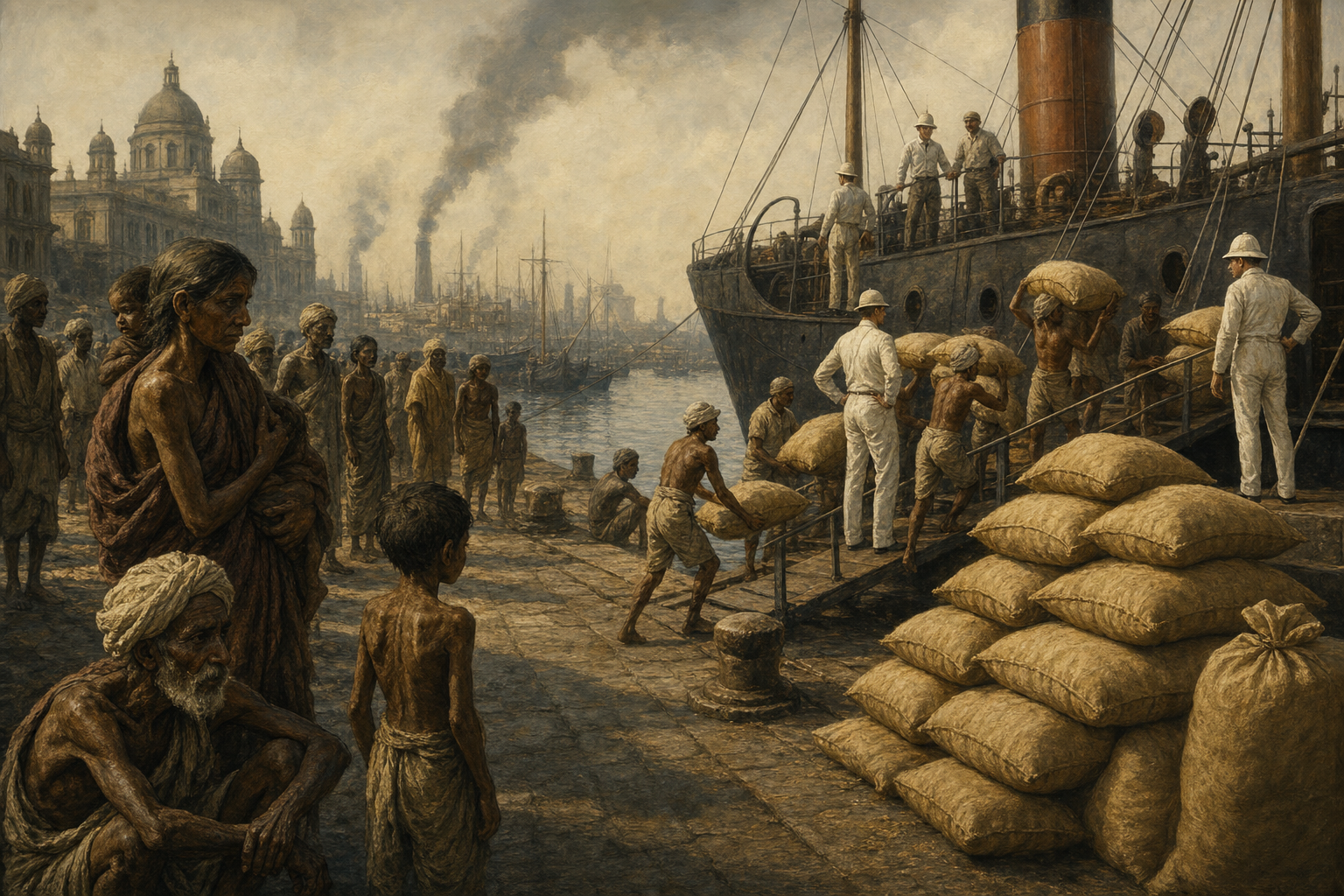
Go back to 1876. An El Nino failed the monsoon across India, and the crops withered. But India was not actually out of food. During the famine, under the British viceroy Lord Lytton, India exported a record amount of wheat to England, around three hundred and twenty thousand tonnes, while its own people starved in the fields the grain came from.
Lytton was a true believer in the free market. Interfering with it, he insisted, would do more harm than good, so relief was made deliberately punishing. To earn a ration you had to perform hard physical labour on a diet set below what a prisoner received, a ration so meagre that people died on it. Private charity was actively discouraged by law. And in 1877, at the very height of the dying, Lytton staged the Delhi Durbar, a week-long imperial pageant proclaiming Queen Victoria the Empress of India, a feast of elephants and fireworks, while perhaps millions starved within reach of it.
In India alone, somewhere between six and ten million people died.
And it was not only India. The same 1877 El Nino dried out northern China, where the Great North China Famine killed perhaps nine to thirteen million, and northeastern Brazil, in the catastrophe Brazilians still call the Grande Seca, the Great Drought. Across this linked chain of El Nino famines in the late nineteenth century, the death toll ran into the tens of millions, by some estimates between thirty and sixty million human beings.
The historian Mike Davis gave these events their name, in a book called Late Victorian Holocausts, and made the argument that haunts this whole story. The climate, he said, supplied the drought. But the mass death was manufactured. It was made by colonial governments so committed to the free market that they let grain flow out of starving regions because the ledgers said it should, and let people die rather than break the rules of political economy. Davis argued that this was, quite literally, where the modern Third World was made: prosperous regions hollowed out and broken by being forced, at the worst possible moment, into a global market that valued their grain more than their lives.
Now come back to 2026. The UN's World Food Programme and its Food and Agriculture Organisation are warning that a strong El Nino is likely to form by the middle of the year, that rice harvests across South Asia and southern Africa could fall by anywhere from a fifth to a half, and that the number of people facing acute hunger could jump by tens of millions. They have flagged thirteen hunger hotspots, with Sudan, South Sudan, Yemen and Gaza already at the edge of famine.
But read the warning closely, and the echo is almost exact. The danger is not only the weather. Funding for global food aid has collapsed by nearly sixty percent in just three years. The war around the Gulf has driven up the price of fuel and fertiliser, urea up forty-six percent in a single month, which raises the cost of growing food everywhere on earth. Whether the El Nino of 2026 actually becomes a famine, and where, depends far less on how much rain falls than on choices: how much aid is funded, whether grain and fertiliser are allowed to keep flowing, whether the people in charge decide that distant lives are worth the cost of saving.
That is the hard lesson Lytton's India still teaches, a hundred and fifty years on. Drought is nature. Famine is a decision.
El Nino has never killed anyone. It cannot. It withholds the rain, and then human beings decide who eats and who does not. In 1877, with full granaries within reach and grain ships sailing for England, they decided wrong, and tens of millions died. The rain is about to falter again in 2026. The decision, once again, is entirely ours.