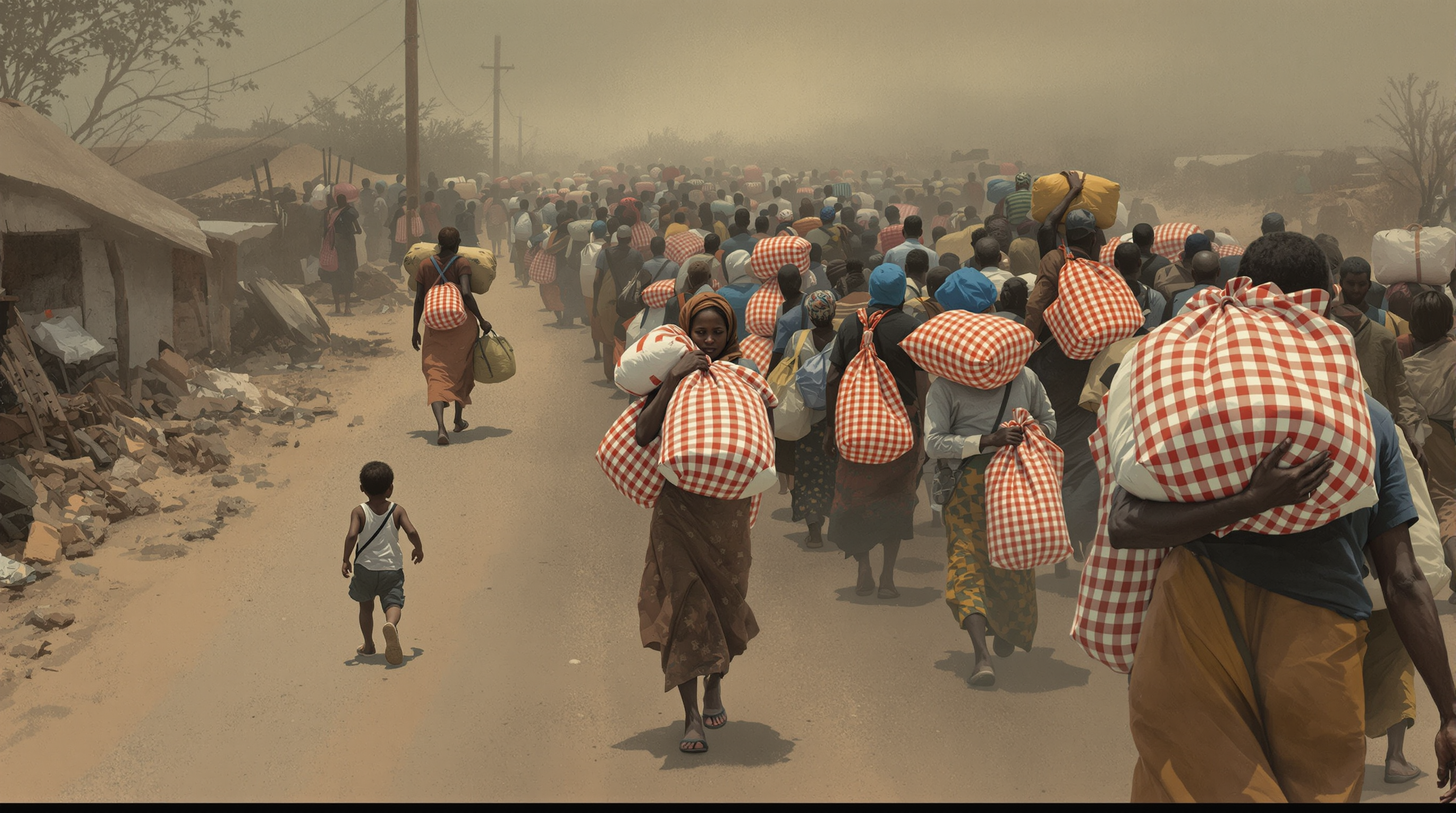
In the first weeks of 1983, the roads out of Nigeria filled with people carrying their whole lives in cheap plaid bags. Woven nylon, red and blue and white check, a zip across the top. More than a million Ghanaians, and a million others, stuffed everything they owned into those bags and ran for the border.
Across West Africa, that bag still has a name. People call it the Ghana Must Go bag. This is the story of how a piece of luggage got its name, and why the story is happening again.
A decade earlier, Nigeria had been the place to go. The oil boom of the 1970s made it the richest country in the region, and workers poured in from all over West Africa to build it, teach in it, trade in it. Ghanaians came in their millions, fleeing their own country's collapse. For a while, everybody won.
Then the oil price broke. From 1982 the markets that bought Nigeria's crude slipped into recession, demand fell, and a barrel that had fetched thirty-seven dollars dropped toward twenty-nine. By 1982, by some accounts, ninety percent of Nigeria's foreign reserves were simply gone. Jobs vanished. Prices soared. And a frightened, angry country went looking for someone to blame.
It found the foreigners. In January 1983, President Shehu Shagari issued an executive order: all illegal immigrants were to leave the country, and they had about two weeks to do it. The unskilled were given almost no time at all. Overnight, neighbours became aliens. More than two million people were expelled, around a million of them Ghanaians, the largest group by far.
The exodus was chaos. Roads clogged with desperate families. Then Ghana's own borders jammed, and the crowds piled up in Benin, stranded between countries that no longer wanted them, until Ghana finally reopened the gates and even sent ships to carry people home by sea. And everywhere, in every photograph, those same cheap checked bags. The name stuck to them like a verdict.
Here is the part that should stop you. Fourteen years earlier, in 1969, it had run the other way. Ghana, in its own hard times, had expelled hundreds of thousands of foreigners, many of them Nigerians, under something called the Aliens Compliance Order. The 1983 expulsion was, in part, the same wheel coming back around. Scapegoating the outsider was not a Nigerian habit or a Ghanaian one. It was a regional reflex, passed back and forth whenever the money ran short.
And that is the lesson the bag carries. When an economy sours, the state reaches for the outsider, because it is easier than reaching for the real problem. It almost never fixes the economy. It just decides whose life gets packed into a bag.
In 2026, South Africa is living its own version. The country's economy is stalled, unemployment is among the highest in the world, and the anger has found the same target. Vigilante movements with names like Operation Dudula and March and March have declared that all undocumented migrants must leave the country by the thirtieth of June.
No government passed that deadline. The mobs set it themselves, and then dressed it in the language of law and order, of democracy, of just asking people to follow the rules. On the ground it looks like what it is. In one settlement near Mossel Bay, a crowd tore down fifty-five shacks and two Mozambican men were killed. Elsewhere a Zimbabwean was set alight in the street by a mob who decided he was illegal. Thousands of migrants, papers or no papers, are simply leaving, because staying has become too dangerous to risk.
The South African Human Rights Commission has warned of a possible human rights crisis. They are right to. The script is more than forty years old. The same stalled economy, the same official shrug, the same conviction that the country's troubles are sitting in someone else's shack.
The plaid bag has worn a lot of names. In 1969 it was Ghanaian. In 1983 it was Nigerian. In 2026 it is South African. The only thing that never changes is the year that goes looking for someone to fill it.